
Qbet casino Plinko game
Introduction
When I assess fast-format casino titles for Canadian players, I usually separate visual simplicity from actual play behaviour. Qbet casino Plinko is a good example of why that matters. On the surface, Plinko looks almost childlike: a ball drops from the top of a pegboard, bounces left and right, and lands in a payout slot at the bottom. That is the entire premise. But the real player experience is more layered than the interface suggests.
At Qbet casino, Plinko stands out because it strips gambling down to a very direct loop: choose a stake, set a risk level, release the ball, watch the path, and see where it lands. There are no paylines, no bonus rounds, no symbol collections, and no long rule sheet to decode. That accessibility is a major part of its appeal. At the same time, the lack of decorative complexity makes the underlying math feel more exposed. In Plinko, every drop feels like a small experiment in probability.
What interests me most about Q bet casino Plinko is that it attracts very different types of players for different reasons. Some enjoy the speed. Some like the visual suspense of the bouncing ball. Others are drawn to the ability to adjust risk and immediately feel how the session changes. This is not just a casual novelty. It is a format with a distinct tempo, a very specific psychological pull, and a risk profile that can be misunderstood if a player treats it as a harmless arcade-style diversion.
In this review, I will focus strictly on the Plinko game itself: how it works, why it holds attention, what its practical strengths are, where the pressure points sit, and what a player in Canada should understand before launching a session at Qbet casino.
What Qbet casino Plinko actually is and why it draws so much attention
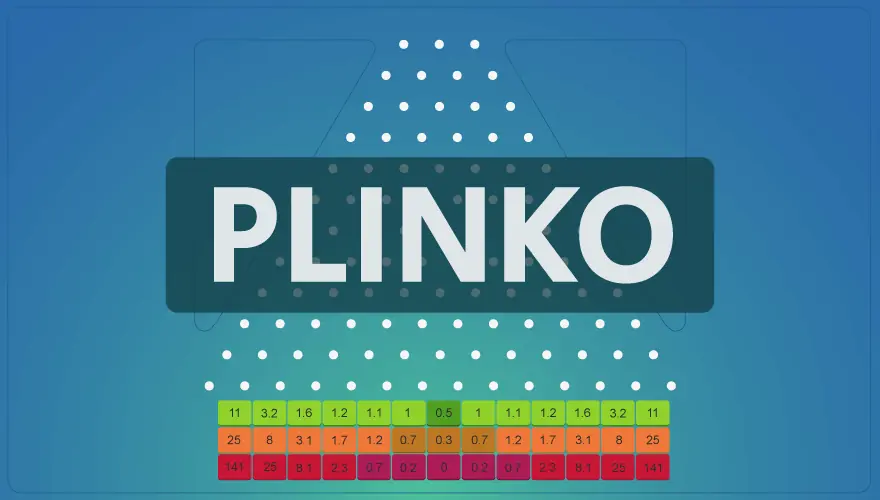
Plinko is a chance-based casino game built around a pegboard layout. A ball is dropped from the top, collides with multiple pins on the way down, and eventually lands in one of several multiplier slots. The payout is determined by the multiplier attached to the final slot. In plain terms, the whole game is about where the ball finishes, not about building combinations or triggering layered events.
That sounds minimal, and it is. But this minimalism is exactly why the format became so noticeable. A player can understand the basic concept in seconds. There is no barrier to entry. Even someone who rarely touches online Qbet Casino games can look at the board and instantly grasp what is happening. From a usability perspective, that is a major advantage.
The second reason Plinko attracts attention is visibility of randomness. In many casino products, the result is hidden behind spinning reels, card dealing, or animated reveals. In Plinko, randomness is given a path. The ball does not simply produce an outcome; it appears to travel toward one. That visual journey creates suspense that feels more tangible than a standard instant result.
I often describe Plinko as a game where the route becomes part of the entertainment. Two drops with the same stake can create completely different emotional reactions depending on how the ball moves. A clean slide into a low multiplier feels flat. A chaotic bounce near the edges before landing in a high multiplier can feel dramatic, even if the session overall is losing. That difference matters because it explains why players stay engaged longer than the simple rules might suggest.
There is also a practical reason for its rise. Plinko fits modern short-session play. It works well for players who do not want to commit to a long slot cycle or a full table-game rhythm. You can play a few drops, reassess, change settings, and leave without feeling you have stepped away in the middle of a larger structure.
How the Plinko mechanics work in real play
At its core, the mechanics of Qbet casino Plinko revolve around four elements: stake size, board layout, risk level, and the final multiplier distribution. The player chooses a bet amount, selects a risk setting, and in some versions may also choose the number of rows. Once the ball is released, it falls through the board and hits pegs that redirect it left or right until it lands in a payout zone.
The key point is that the board is not just visual decoration. It is the framework through which the multiplier map is expressed. In most Plinko versions, the center slots tend to carry lower multipliers because they are easier to reach statistically, while the extreme edge slots offer larger multipliers because they are less likely to be hit. This is the basic trade-off that shapes the entire experience.
Risk level changes how sharply those payouts are distributed. On lower risk, the board usually offers a flatter payout profile. The center remains common, but the difference between ordinary and rare results is less extreme. On higher risk, the same board becomes more polarized. Small returns or dead zones appear more often, while the top multipliers become more dramatic but also less frequent.
That means the player is not simply choosing how much to bet. They are choosing what kind of session they want to experience. In practical terms, that is one of the most important things to understand before starting.
| Core element | What it changes | Why it matters in practice |
|---|---|---|
| Stake amount | Value of each drop | Directly affects bankroll pressure and session length |
| Risk level | Payout distribution | Changes how often modest results appear versus rare large multipliers |
| Rows, if available | Board depth and path complexity | Can alter pacing, result spread, and perceived suspense |
| Multiplier map | Value of landing zones | Defines the balance between routine outcomes and occasional spikes |
One detail many players underestimate is that the movement of the ball feels physical, but the game remains governed by programmed probability. The bounce pattern creates the impression that near-misses carry meaning. In reality, the outcome is still part of a controlled distribution. That does not make the game less legitimate; it simply means the visual drama should not be mistaken for a pattern the player can read or exploit.
This is one of the most useful observations I can offer: in Plinko, the path feels personal, but the math remains indifferent. The board invites interpretation, while the probabilities resist it.
Why the session rhythm feels so different from most casino titles
The tempo of Plinko is one of its defining strengths. A single round resolves quickly, but not instantly. There is a short window of suspense between the release and the landing. That tiny delay is enough to create anticipation without forcing the player into a slow cycle.
Compared with many slot machines, the rhythm is cleaner. There are no long reel animations, no feature teases, and no waiting for side mechanics to finish. Compared with roulette or blackjack, there is less procedural downtime. You are not waiting for a dealer phase, table resolution, or strategic decision tree. The loop is compact and repeatable.
In practice, this creates a session style that can become deceptively intense. Because each drop is brief, players can move through many rounds in a short period. That makes bankroll movement faster than some newcomers expect. A low stake can make the game feel harmless, but a fast sequence of drops still adds up quickly.
There is also an emotional rhythm unique to Plinko. The game alternates between calm repetition and sudden spikes of excitement. Most drops may end in modest multipliers or low returns, then one unusual landing changes the tone of the session. This stop-start emotional pattern is part of the hook. It is not the same as the sustained build of a bonus chase in slots. It is more like a series of brief suspense pulses.
A second observation worth remembering: Plinko often feels slower emotionally than it is financially. The board animation gives each drop a sense of space, but the actual wagering pace can still be very high.
Understanding probability, risk levels, and expected outcomes
If a player wants to approach Qbet casino Plinko responsibly, this is the section that matters most. The game is easy to launch, but it should not be approached casually from a mathematical point of view. Plinko is heavily driven by distribution. The result of any single drop can vary sharply, especially on elevated risk settings, and short-term swings are normal rather than exceptional.
Low-risk mode usually produces a steadier stream of smaller multipliers. This does not mean a player is safe from losses. It means the swings tend to be less violent, and session behaviour may feel more controlled. High-risk mode usually does the opposite. It introduces a wider gap between ordinary results and standout multipliers. That can create more dramatic moments, but it also increases the chance of long stretches where the board returns very little.
Players often make a mistake here. They see the possibility of a high multiplier and assume the game becomes more attractive at maximum risk. In reality, the right setting depends on tolerance for variance, bankroll size, and the purpose of the session. A player looking for extended play and moderate pacing may find high risk exhausting. A player who wants occasional explosive outcomes may accept that trade-off more easily.
Probability in Plinko is distribution-based, not streak-readable. A few edge hits in one session do not mean another is due soon.
Higher risk changes the shape of returns, not the fairness of the game. It increases spread, not player control.
Short sessions can be misleading. A small sample of drops may create false confidence or unnecessary frustration.
What should a player expect in practical terms? Most sessions will be built on frequent ordinary landings and infrequent standout results. The center of the board tends to absorb much of the action. The outer edges create the fantasy of the session-changing hit. That contrast is intentional. It is how the game sustains interest.
For Canadian players trying Q bet casino Plinko, the best mindset is not to ask whether a high multiplier can happen. It can. The better question is how often one is likely to appear relative to the bankroll being used. That shift in thinking leads to more realistic decisions.
How Plinko compares with slots, roulette, and other common casino formats
Plinko is often grouped with casual casino content because it is easy to understand, but from a player-experience standpoint it sits in its own lane. It is not a slot in the classic sense. There are no reels, no paylines, no symbol weighting visible to the player, and no layered bonus architecture. Instead, there is a single event with a visible descent and a multiplier-based finish.
Against slots, the biggest difference is transparency of structure. In slots, complexity is often hidden behind theme and features. In Plinko, the structure is almost naked. You can see the board, the landing zones, and the stake impact immediately. That makes the game feel more direct, though not necessarily more predictable.
Against roulette, Plinko shares the appeal of a simple bet-to-outcome cycle, but the emotional presentation is different. Roulette resolves in a clean, binary style based on where the ball lands. Plinko turns the journey itself into the spectacle. The suspense is stretched across multiple bounces rather than concentrated in one final stop.
Against crash-style games, Plinko is less about timing decisions and more about accepting a probability model chosen before the drop. The player is not cashing out at the right moment. They are selecting a session profile and letting the board do the rest.
| Format | Main player experience | What Plinko does differently |
|---|---|---|
| Classic slots | Reel spins, symbols, feature chasing | Offers a cleaner loop with fewer layers and more visible outcome framing |
| Roulette | Single-event betting with fixed outcomes | Adds a visual descent that makes suspense feel more dynamic |
| Blackjack | Decision-based card play | Removes strategy depth and replaces it with pure chance and pace |
| Crash games | Timing and cash-out pressure | Shifts tension from decision timing to result distribution |
This is why Plinko tends to divide opinion. Players who enjoy strategic input may find it too passive. Players who are tired of feature-heavy slots may find it refreshingly clean. Neither reaction is wrong. It depends on what someone wants from a session.
What the game does well and where the limitations appear
Qbet casino Plinko has several genuine strengths. First, it is accessible without being shallow at first glance. A new player can understand the rules immediately, but still spend time learning how different risk settings affect the session. Second, the visual suspense is efficient. The board creates tension with almost no clutter. Third, the title works well for short bursts. It does not demand a long commitment to reveal its core behaviour.
There is also a practical strength many players appreciate: parameter-driven flexibility. When a Plinko version allows changes in risk and rows, the same title can feel quite different from one session to another. That is useful for players who want some control over session texture without moving to a completely different game type.
Still, the limitations are real. The biggest one is repetition. Because the core loop is so compact, some players will feel they have seen everything the game has to offer within a short time. There is no narrative progression, no feature ladder, and no evolving structure to uncover. If a player needs variety inside the same title, Plinko may lose its grip quickly.
Another weak point is the illusion of readability. The visible path can tempt players into believing they are observing trends. They are not. This can create a false sense of insight that encourages poor stake discipline. In that sense, Plinko is simple to play but not always simple to interpret correctly.
A third issue is bankroll acceleration. Because rounds resolve quickly and the interface feels lightweight, players can underestimate how much they are staking over ten or fifteen minutes. This is especially relevant on high-risk settings, where dry stretches can become expensive faster than expected.
Best practical strengths: fast access, clear rules, satisfying visual suspense, adaptable session profile.
Main practical drawbacks: repetitive loop, no strategic depth, easy bankroll drift, high variance on aggressive settings.
One more observation that separates Plinko from many other formats: its simplicity can make losses feel more exposed. In a slot, players often tolerate losing spins because features and animations create a sense of progression. In Plinko, there is nowhere for the session to hide. If the returns are weak, the board shows that plainly.
Who Plinko suits best and who may prefer another style
In my view, Qbet casino Plinko suits players who value immediacy, visual suspense, and a straightforward betting loop. It is a good fit for someone who wants to understand a game quickly and does not need bonus complexity to stay engaged. It can also work for players who like testing different risk profiles within the same format.
It is less suitable for players who want meaningful decision-making. If someone enjoys blackjack because choices affect the round, or prefers poker-style tension built around reading situations, Plinko may feel too passive. Likewise, players who love long-form slot sessions with expanding features, free spins details, and layered mechanics may find the board too repetitive after the novelty wears off.
I would also be cautious recommending high-risk Plinko to players who are easily drawn into rapid-fire chasing behaviour. The game can produce a strong “one more drop” impulse because each round is so short and the next result always feels close. That is not unique to Plinko, but the structure amplifies it.
For practical guidance, I would frame the audience this way:
Likely to enjoy Plinko: players who want fast rounds, clean presentation, and visible suspense without learning a complex ruleset.
May lose interest quickly: players who need evolving features, strategic input, or long-form progression inside a session.
Should be especially careful: players using aggressive stake sizing or high-risk settings with a limited bankroll.
What to check before starting a session at Qbet casino
Before launching Plinko at Qbet casino, I recommend looking at the game less as a novelty and more as a format with a specific behavioural profile. A few practical checks can make a real difference.
First, review the available risk settings and understand what they imply. Do not choose a higher setting just because the top multiplier looks attractive. Ask whether your bankroll can absorb a rough sequence without pushing you into reactive decisions.
Second, keep the stake proportionate to session speed. In a slow table game, a certain bet size may feel manageable. In Plinko, the same amount can move through the bankroll much faster simply because the rounds resolve quickly.
Third, if a demo mode is available, use it to observe rhythm rather than to search for a pattern. The useful lesson from demo play is not “when the board pays.” It is how the game feels over repeated drops, how often ordinary landings appear, and whether the chosen setting matches your tolerance for swings.
Fourth, pay attention to your own reason for playing. If the goal is quick entertainment with clear outcomes, Plinko can do that well. If the goal is deep engagement over a long session, another format may be better.
These are the points I would prioritize before real-money play:
Choose risk level based on variance tolerance, not on headline multipliers.
Set a session budget before the rapid pace starts influencing decisions.
Treat the ball path as presentation, not as a system to decode.
Decide in advance whether you want short entertainment or a longer session style.
Final verdict on Qbet casino Plinko
Qbet casino Plinko offers a very specific kind of casino experience: fast, visually clear, chance-driven, and built around the tension of a visible descent. Its biggest strength is that it communicates its core idea instantly while still allowing meaningful variation through risk settings and, in some versions, board depth. For the right player, that makes it one of the cleanest short-session formats available.
What it does not offer is strategic depth or long-form progression. The loop is deliberately narrow. That is a benefit if you want direct action and transparent structure. It is a limitation if you prefer layered slots, table-game decisions, or a stronger sense of development inside a session.
The main caution point is not complexity but pace. Plinko looks light, but its rhythm can move money quickly, especially when higher risk is selected. That is why understanding variance matters more here than many newcomers expect. The game is easy to enter and easy to misread.
My overall conclusion is straightforward. Q bet casino Plinko is worth trying if you want a simple interface with real suspense, adjustable session character, and none of the clutter that often surrounds modern casino content. It is less suitable if you need strategy, evolving features, or slower bankroll movement. In other words, Plinko genuinely delivers what it promises, but only if the player recognizes what it is: not a toy, not a slot clone, and not a system to beat, but a compact probability game with a surprisingly sharp emotional rhythm. Before treating this page as the full answer, serious players can use Qbet Casino withdrawal limits guide before choosing a real money casino to check a connected high-intent casino topic.
FAQ
How does Plinko work on the game screen, from the ball drop to the final multiplier?
Plinko starts with placing or selecting your stake, then releasing the ball so it bounces down the board. Each landing zone pays a multiplier shown on the grid, and the total result is credited to the game outcome. Round history updates after each drop so the next ball can be launched quickly.
What should be checked before starting a real-money Plinko session on the official site?
Confirm the selected bet size and any round settings before the ball is released. The game interface may also show table limits for your stake, so verify what fits your bankroll. A quick read of the on-screen help is enough to understand payout zones and round flow.
Can Plinko be played on a mobile device through the mobile browser or the mobile casino app?
Plinko works well on mobile using the mobile site layout, with touch controls for releasing the ball. If using the mobile casino app, the game screen typically keeps the same multiplier grid and bet controls. For smaller screens, zooming the board can make the landing zones easier to read.
Does Plinko require a casino login, and how does sign-in affect game access?
Real-money Plinko typically requires sign in so the account can track wagering and balance changes. Demo mode can often be accessed without the same cash account steps, but real-money play still relies on an authenticated profile. Keeping the login active helps avoid interrupted rounds.